
KhyatiGems knowledge library
Tourmaline
Tourmaline is a group of minerals with many colours and compositions. A single crystal may contain distinct colour zones.
AI-assisted source review · 2026-10-16. No named gemologist review is claimed. How this reference was reviewed.
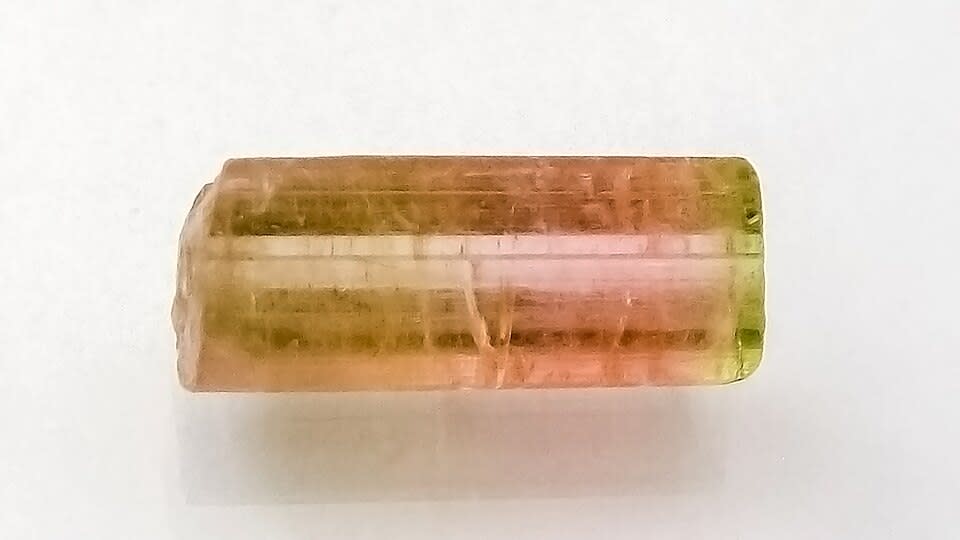
W.carter · CC BY-SA 4.0 · Source · CC BY-SA 4.0
| Material classification | Tourmaline |
|---|---|
| Mohs hardness (reference) | 7–7.5 |
Identity and appearance
Tourmaline is a group of minerals with many colours and compositions. A single crystal may contain distinct colour zones.
Names such as rubellite and indicolite describe familiar trade colour categories. They do not, by themselves, establish species, geographical origin or treatment.
Care and handling
Heat, filling and other enhancement questions require disclosure for the particular stone. Avoid equating a vivid photograph with a complete report.
Questions for an individual stone
Keep the material name, natural or laboratory-grown origin, treatment description and any report together. Ask which conclusions were established by examination and which remain unknown. The reference properties here describe a material; they are not measurements of a stone offered for sale.
If a description and report disagree, request clarification before making a decision. Photographs are useful for discussing appearance, but cannot authenticate a specimen. Keep care instructions with the item so that a jeweller or repairer can assess it before work begins.
Comparison and interpretation
A multicoloured crystal can make the tourmaline group particularly interesting to explore. Its visible zones may be used by a cutter to create a two-colour or watermelon appearance, but the resulting outline does not determine mineral species or mine. Compare a colour term such as rubellite with the actual identification on a report. If a special trade designation is used, ask what conditions the designation refers to and whether they were examined. Colour, chemistry, geographical origin and treatment are related questions, but none should silently replace the others.
Choosing and documenting a piece
For cut stones, ask to see the same gem from more than one direction and in neutral lighting. Orientation and cutting can influence how dark or bright a colour appears. Consider the intended setting with a jeweller rather than choosing only from a highly lit close-up. Keep treatment information with the stone, including any disclosure concerning clarity enhancement. A reference photograph of one tourmaline should not stand for every member of this diverse group. If a claim goes beyond what a report examined, ask for the scope to be made explicit.
Before making a decision
For tourmaline, ask the seller to identify the actual item, state what remains unknown and explain the scope of any report. Keep photographs, measurements and written disclosures together. If an answer matters to your decision, obtain it before commissioning a setting or arranging a repair.
Sources and further reading
- GIA Tourmaline reference Checked 2026-10-16