
KhyatiGems knowledge library
Opal
Opal is hydrated silica. Precious opal displays play-of-colour, while common opal does not; body colour and play-of-colour are separate observations.
AI-assisted source review · 2026-10-16. No named gemologist review is claimed. How this reference was reviewed.
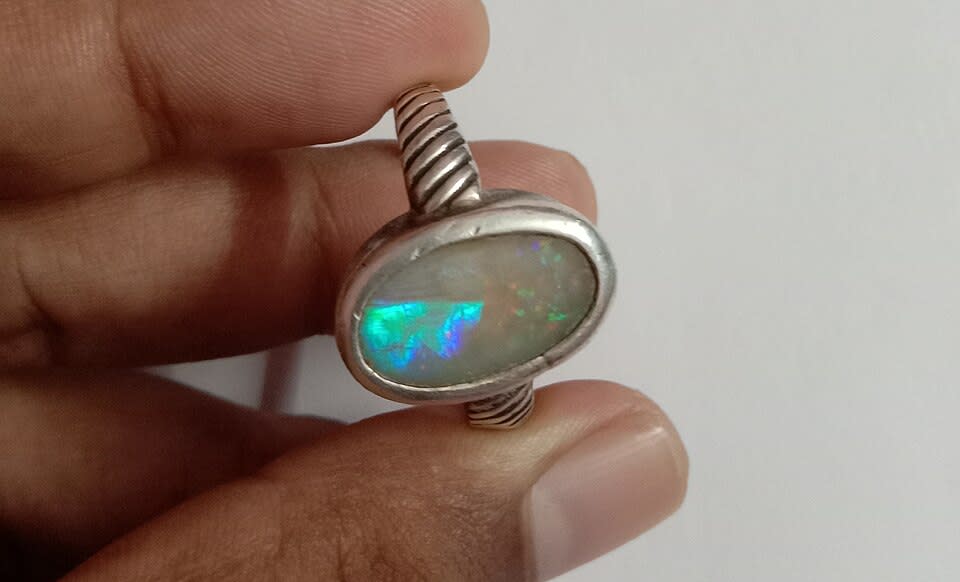
Billjones94 · CC BY-SA 4.0 · Source · CC BY-SA 4.0
| Material classification | Hydrated silica |
|---|---|
| Mohs hardness (reference) | 5–6.5 |
Identity and appearance
Opal is hydrated silica. Precious opal displays play-of-colour, while common opal does not; body colour and play-of-colour are separate observations.
A solid opal is different in construction from an opal doublet or triplet. Request a description of the entire object, including backing or protective layers.
Care and handling
Avoid heat and sudden environmental changes. Ask about water sensitivity and any impregnation or assembled construction before choosing a cleaning method.
Questions for an individual stone
Keep the material name, natural or laboratory-grown origin, treatment description and any report together. Ask which conclusions were established by examination and which remain unknown. The reference properties here describe a material; they are not measurements of a stone offered for sale.
If a description and report disagree, request clarification before making a decision. Photographs are useful for discussing appearance, but cannot authenticate a specimen. Keep care instructions with the item so that a jeweller or repairer can assess it before work begins.
Comparison and interpretation
Separate body colour, play-of-colour and construction when reading an opal description. Two photographs may capture quite different flashes from the same precious opal as the angle changes. A short video can help explain that movement, but it does not prove that the object is solid opal or untreated. Ask for views that show the side and back where appropriate. A doublet or triplet includes assembled components, and those components belong in the description. Common opal can be attractive without play-of-colour; its absence is not automatically evidence of an imitation.
Choosing and documenting a piece
Plan care around the individual material and the way it has been assembled. Ask about porosity, treatments and any backing or protective layer before immersing a piece or choosing a cleaner. Storage advice should reflect the actual opal rather than a universal internet recipe. Avoid heat and abrupt changes, and ask a professional to assess cracking or an uncertain surface before repair. Keep construction information with the item. A photograph selected to illustrate play-of-colour is an educational example, not a statement that all opals show that effect or tolerate identical handling.
Before making a decision
For opal, ask the seller to identify the actual item, state what remains unknown and explain the scope of any report. Keep photographs, measurements and written disclosures together. If an answer matters to your decision, obtain it before commissioning a setting or arranging a repair.
Sources and further reading
- GIA Opal reference Checked 2026-10-16